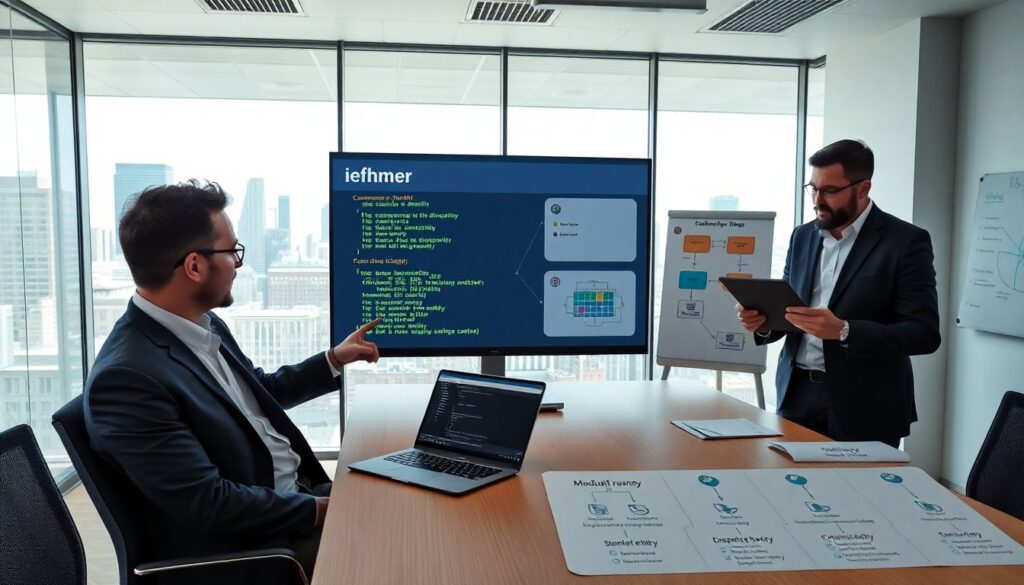

Iefhmer is a term for a specific type of data model and workflow tool. It grew from simple scripting and data mapping work. It focuses on small teams that need predictable data flows. It reduces manual steps and speeds up routine tasks. This guide defines iefhmer and shows how teams use it in production.
Table of Contents
ToggleKey Takeaways
- Iefhmer is a lightweight data orchestration tool designed for small teams needing predictable, fast data workflows.
- It uses a simple rule file, runner, and log store to execute tasks sequentially with clear logging and minimal overhead.
- Iefhmer reduces manual steps, lowers costs, and favors direct control over automation in managing data tasks.
- While ideal for straightforward pipelines, iefhmer is not suited for very large or complex scheduling needs.
- Best practices include keeping rule files modular, using version control, testing tasks locally, and maintaining clear alerting and log archiving.
- Teams should securely store credentials and routinely review runs to ensure stable, predictable iefhmer performance.
What Is Iefhmer? A Clear Definition And Origin
Iefhmer is a name for a lightweight data orchestration pattern. It uses rules, simple transformations, and scheduling. It came from a group of engineers who needed repeatable data tasks. They built iefhmer as a set of scripts and a small runtime. The runtime runs tasks in order and reports success or failure. It stores minimal state and keeps logs for audit. Teams adopted iefhmer when they wanted fast setup and low cost. It works well where full-scale platforms add overhead. Iefhmer favors clarity and direct control over hidden automation.
Core Components And How Iefhmer Works
Iefhmer has three core components: a rule file, a runner, and a log store. The rule file lists steps and the conditions for each step. The runner reads the rule file and executes steps in sequence. The log store saves outputs and error messages. Each component uses plain text or small JSON files. The rule file uses a small syntax that the runner parses. The runner uses a task queue and a retry policy. The log store provides a simple query interface for recent runs. These parts keep iefhmer simple and predictable.
Benefits, Limitations, And Practical Best Practices
Iefhmer gives fast setup and clear behavior. It lowers cost and reduces hidden failures. It keeps logs simple and readable. It works with existing scripts and tools. Iefhmer has limits. It does not scale to very large pipelines easily. It lacks built-in scheduling for complex calendars. It does not provide advanced dependency graphs or visual editors. Teams should match tool choice to needs. For best results, keep rule files small and modular. Use version control for rule files and the runner. Test tasks locally before production runs. Set sensible retry counts and clear alerts. Archive logs by date to avoid large files. Review runs weekly to catch drift. Use secure storage for any credentials the runner needs. These steps keep iefhmer stable and predictable.