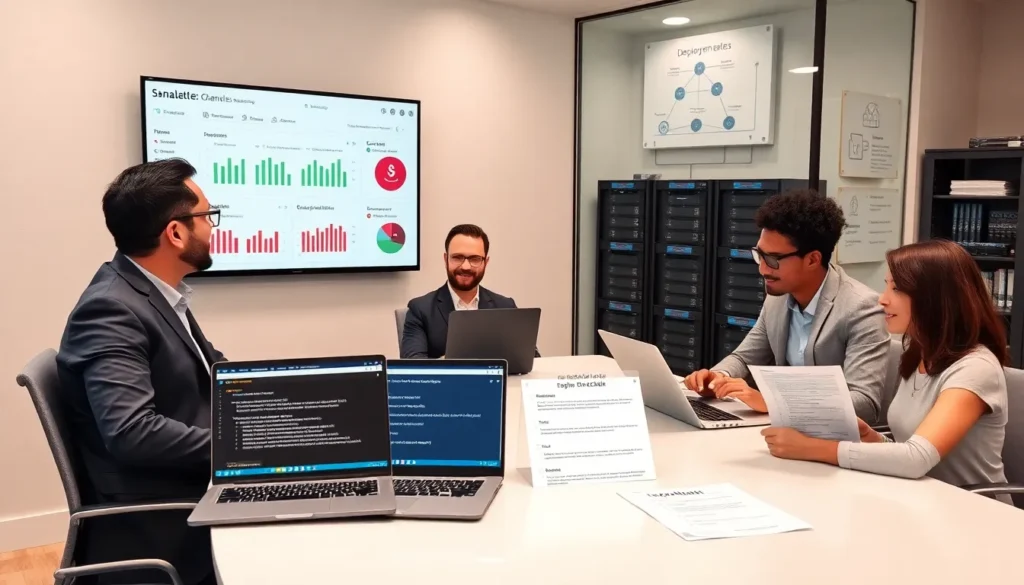

Sbnaslfldr helps teams store and serve large binary files. It reduces download time and cuts storage costs. The introduction sets clear expectations. The reader will learn what sbnaslfldr is, how it works, and how to deploy it.
Table of Contents
ToggleKey Takeaways
- Sbnaslfldr speeds delivery of large binaries by chunking files, serving chunks in parallel, and validating checksums to prevent silent corruption.
- Deploy sbnaslfldr with CDN integration and storage tiering to lower egress costs while caching hot files at the edge for faster downloads.
- Follow the step‑by‑step deployment checklist: provision nodes, configure storage/CDN connectors, enable metrics, seed test files, and run realistic load tests.
- Monitor latency, throughput, and error rates and automate replication, alerts, and orphan‑chunk cleanup to maintain reliability and prevent data loss.
- Use versioning, retention policies, key rotation, and quarterly disaster‑recovery tests to keep sbnaslfldr maintainable and secure at scale.
What Is Sbnaslfldr?
Sbnaslfldr is a file distribution service for large binary assets. It stores files in a way that speeds downloads. It balances storage across multiple nodes. It exposes APIs for uploading and fetching files. It supports versioning and simple access controls. Many teams use sbnaslfldr for game assets, media delivery, firmware updates, and large dataset distribution. The service aims to reduce latency and keep bandwidth costs low. It integrates with CDNs and object storage systems. It provides audit logs and usage metrics. The system focuses on predictable performance and straightforward integration.
Sbnaslfldr acts as a gateway between storage backends and application clients. It handles chunking and parallel transfer. It resumes interrupted transfers automatically. It validates file integrity during upload and download. It verifies checksums to avoid silent corruption. It exposes a clear API and a small SDK for common languages. It also offers a command line tool for bulk operations.
Key Benefits And Use Cases
Sbnaslfldr reduces download times by serving files in parallel. It lowers storage costs by tiering cold and hot data. It simplifies deployment by providing predictable APIs. It improves reliability with built-in retries.
Common use case: A game studio uses sbnaslfldr to deliver patches. The studio uploads patch files and clients download chunks in parallel. The studio sees faster installs and fewer failed downloads.
Common use case: A media company uses sbnaslfldr to stream high-resolution assets to editors. The editors fetch portions of large files without waiting for full downloads. The company saves on CDN fees by caching hot files only.
Common use case: An IoT vendor uses sbnaslfldr to push firmware updates. The vendor verifies checksum and deploys updates incrementally. Devices resume updates after connection drops.
Sbnaslfldr fits teams that need predictable delivery, version control, and simple access management. It suits use cases with large files and many clients.
How Sbnaslfldr Works
Sbnaslfldr divides large files into fixed-size chunks. The service stores chunks across nodes. It keeps a manifest that lists chunk locations and checksums. A client requests the manifest first. The client downloads chunks in parallel. The client verifies checksums after each chunk. The service rebuilds the file on the client side.
Sbnaslfldr exposes REST APIs for manifest, upload, and download. It supports range requests for partial reads. It supports signed URLs for temporary access. It logs every upload and download event. It exposes metrics for latency, throughput, and error rates.
Sbnaslfldr can push hot files to a CDN edge. It can move cold files to cheaper object storage. The system runs background jobs for rebalancing and cleanup. It monitors node health and re-replicates chunks when needed. The design prioritizes data integrity and steady throughput.
Implementing Sbnaslfldr: Step‑By‑Step Guide
Gather Requirements And Prepare Resources
The team identifies file sizes, expected client count, and peak bandwidth. The team picks storage backends and CDN providers. The team allocates servers for sbnaslfldr nodes. The team sets up monitoring and alerting. The team creates service accounts for uploads.
Configuration And Deployment Steps
The team installs the sbnaslfldr server on each node. The team configures storage backends and the CDN connector. The team sets API keys and access policies. The team seeds the service with a few test files. The team enables metrics and logs. The team runs load tests that mirror expected client behavior.
Testing And Validation Checklist
The team verifies upload throughput with sample files. The team tests interrupted uploads and automatic resume. The team checks checksum validation on downloads. The team validates signed URL expiry and permissions. The team measures real-world download times from different regions. The team confirms re-replication after node failure. The team reviews logs for errors and slow requests.
Common Challenges And How To Solve Them
Sbnaslfldr faces network variance and storage hotspots. It also sees incomplete uploads and checksum mismatches. The team must plan for scaling and failure.
Sbnaslfldr requires monitoring to spot slow nodes. The team should set alerts for high latency and error spikes. The team should automate replication to avoid data loss. The team should enforce backpressure to avoid node overload.
When uploads fail, sbnaslfldr keeps partial chunks until the client retries. The service cleans orphan chunks with a scheduled job. The service rejects corrupted chunks during validation. The service reports the offending chunk in logs.
Sbnaslfldr may need tuning for clients with low bandwidth. The team can lower chunk size and increase parallelism. The team can add CDN caching for hot files. The team can set bandwidth caps per client to avoid abuse.
Best Practices For Long‑Term Maintenance
Monitor throughput, latency, and error rates continuously. Rotate keys and audit access regularly. Archive files that see no traffic to cheaper storage. Run scheduled integrity checks for stored chunks. Test disaster recovery steps each quarter.
Sbnaslfldr benefits from clear versioning policies. The team keeps a limited number of file versions. The team purges old versions after a retention period. The team documents API changes and notifies clients in advance.
Sbnaslfldr benefits from capacity planning. The team projects storage growth and network needs. The team budgets for CDN egress and peak bandwidth. The team uses staged rollouts for major changes. The team maintains rollback steps for configuration updates.
Sbnaslfldr benefits from regular audits of logs and metrics. The team reviews slow requests and repeated errors. The team updates runbooks based on incidents. The team trains on the most common failure modes and fixes.