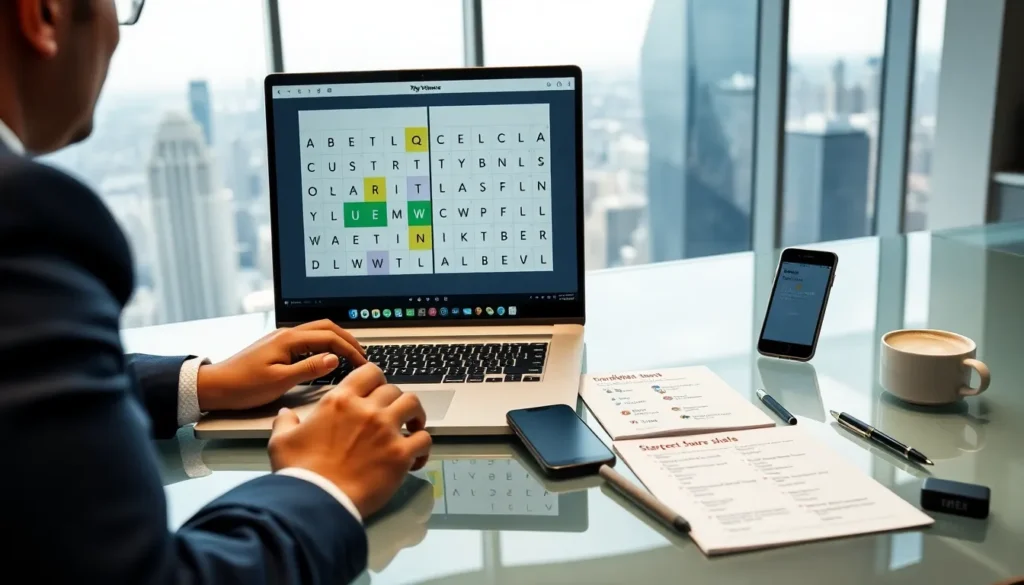

nytimesquordle is a daily puzzle that asks players to find four five-letter words at once. The game shows four grids and one keyboard. Players guess words and the game gives color feedback. This intro explains what the game demands and why players enjoy it.
Table of Contents
ToggleKey Takeaways
- nytimesquordle challenges players to solve four independent five-letter grids with one shared keyboard, so make every guess count across all boards.
- Start with starter words that maximize vowel and common-consonant coverage (A, E, O, R, S, T, L, N) and avoid repeated letters to test more possibilities.
- Treat each grid as its own puzzle: lock green letters, reposition yellows, and keep separate candidate lists while using shared feedback to eliminate options faster.
- When one grid lags, devote a couple targeted guesses to it only if those guesses also test useful letters for the other grids to preserve overall progress.
- Use practice tools and community resources for pattern training, and refresh or switch browsers if you encounter keyboard or color-display issues.
What Is NYTimes Quordle?
nytimesquordle is a variant of the five-letter word puzzle format. The game presents four independent grids. Players see one shared keyboard. Each guess fills all four grids at once. The game marks letters to show correctness. Green means correct letter and position. Yellow means correct letter wrong position. Gray means the letter does not appear in that grid. The game resets daily with new solutions. Players keep a streak counter and a personal record. Fans like nytimesquordle for the added challenge and pace.
How To Play: Rules And Interface
Players start a nytimesquordle game on the official page or app. The interface shows four grids, one keyboard, and a guess counter. The game gives six guesses by default for each grid. Players type a five-letter guess and press Enter. The guess applies to all four grids at once. The game updates each grid with color feedback. Players continue until they solve all grids or run out of guesses.
Starting A Game Step-By-Step
Players open nytimesquordle on their browser or app. They read the short rules on the screen. They type a five-letter starter word and press Enter. They read the feedback on all four grids. They adjust their next guess based on that feedback.
Understanding Feedback Across Four Grids
Players view separate feedback for each grid. The game colors each instance of a letter independently. A letter can be green in one grid and yellow or gray in another. Players track these differences to refine guesses. They treat each grid as a distinct puzzle while using common letters across grids.
Essential Gameplay Controls And Shortcuts
Players use the keyboard to type guesses. They press Enter to submit a guess. They press Backspace to delete a letter. Some browsers support keyboard shortcuts for accessibility. Players can also tap letters on the on-screen keyboard. The interface works on desktop and mobile.
Strategies For Solving Four Puzzles Efficiently
Players approach nytimesquordle with plan and patience. They prioritize letters that cover many possibilities. They adjust guesses when feedback narrows options.
Optimal First Guesses And Letter Coverage
Players pick starter words that include common vowels and consonants. Good starters cover A, E, O, R, S, T, L, and N. Players avoid repeats in the first guess to test more letters. They choose a second guess that fills gaps left by the first guess. They use the shared feedback to limit possibilities across the four grids.
Managing Shared Information Between Grids
Players note letters that appear green in any grid. They lock those letters into position mentally. They use yellow letters to try new positions in later guesses. They use gray letters only as potential false negatives when other grids contradict the result. They keep a short list of candidate words for each grid and cross-check those lists after each guess.
When To Focus On One Grid Versus All Four
Players focus on one grid when three grids show stable progress and one lags. They devote two or three guesses to the lagging grid if those guesses still test useful letters in the other grids. They switch focus when a single grid blocks overall victory. They avoid ignoring the other grids for too long because time and guesses are limited.
Common Mistakes And Troubleshooting
Players make predictable errors when they rush. They also face occasional interface glitches.
Avoiding Overcommitment To Early Patterns
Players should not assume early yellow placements are final. They should test alternate positions for repeated letters. They should not lock in a word shape too soon. Early commitment can waste guesses across all four grids. Players remain flexible and update candidate lists after each guess.
Dealing With Keyboard Or Display Issues
Players who see wrong colors should reload the page or app. Players who lose keyboard input should click the on-screen keyboard or refresh. Players who play on mobile may rotate the device to improve layout. If the game still misbehaves, players can check official support pages or try a different browser.
Differences From Wordle And Other Variants
nytimesquordle changes how players plan guesses compared to single-grid games. The game raises the mental load and shifts priority on letter testing.
How Quordle Changes Strategy Compared To Wordle
Players must balance information for four targets when they play nytimesquordle. They favor guesses that test many letters across grids. They accept more risk in single guesses because one guess yields four test cases. Players value starter words that reduce unknowns fast.
Comparing Quordle To Dordle, Octordle, And Others
Players note that dordle uses two grids and octordle uses eight. nytimesquordle sits in the middle by difficulty and time. Dordle asks for two solutions per guess so players use similar shared-letter logic. Octordle demands more parallel tracking and often prefers strategic sacrifices. Players pick the variant that matches their time and patience.
Community, Variations, And Where To Play
Players find nytimesquordle on the official site and on some apps. Many players share results on social feeds and chat groups. The community posts daily solutions, tips, and streak boards.
Daily Challenges, Social Sharing, And Streaks
Players complete a daily nytimesquordle challenge and then share a compact emoji grid. The emoji grid hides answers but shows performance. Players track streaks and compare scores with friends. The social aspect keeps many players engaged.
Third-Party Tools, Practice Modes, And Variants
Players use third-party tools for practice and analysis. Tools offer practice modes, solver aids, and custom grids. Players use these tools to learn common patterns and to practice letter coverage. The tools speed up learning and help players improve at nytimesquordle.